
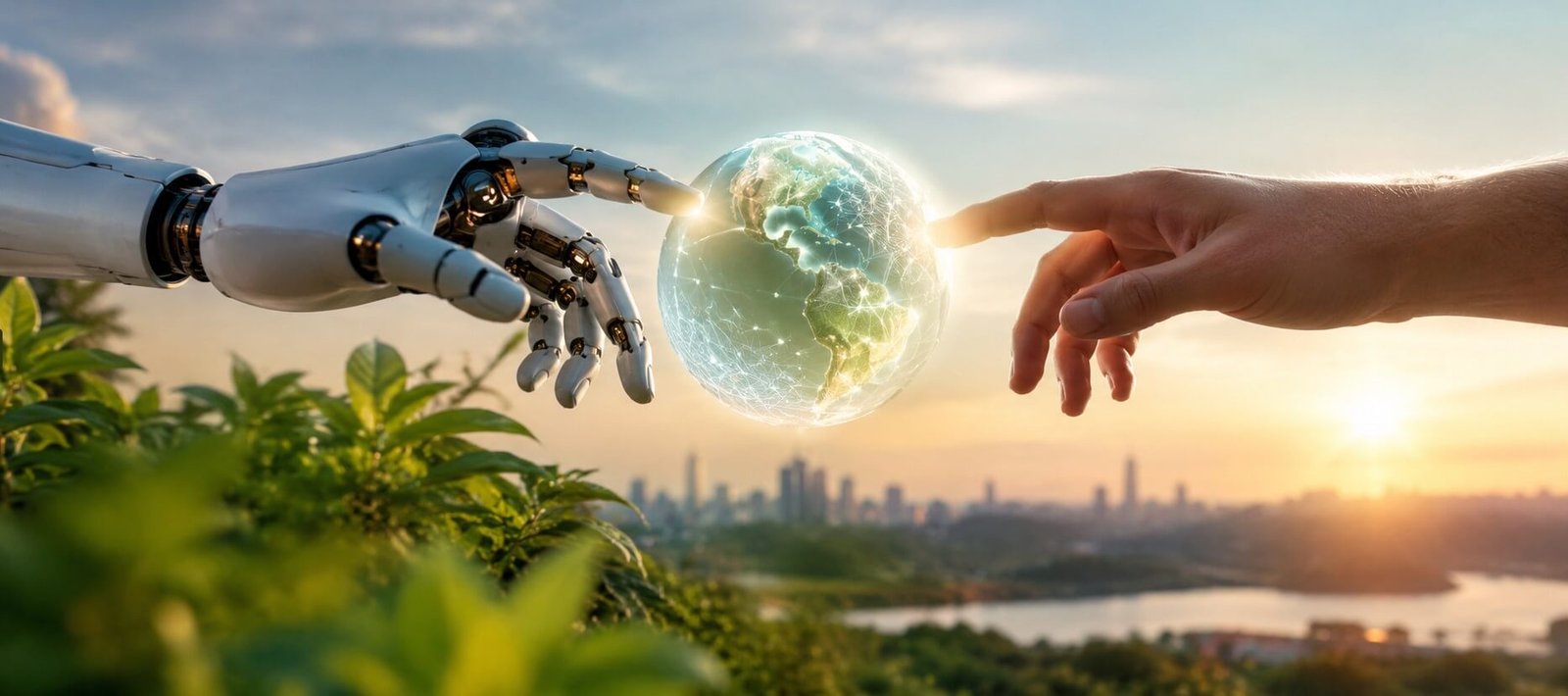
AMORC Declaration on Artificial Intelligence (AI) Throughout human evolution, certain discoveries and inventions have inexorably shaped the direction taken by humanity. Among these is the field of computer science, which in recent years has seen an exceptionally rapid development often leading to unforeseen outcomes. As part of this advancement, Artificial Intelligence (AI) has emerged not simply as a new work tool but, similar to other major inventions such as writing and printing, as a tremendous opportunity for global, cultural and ethical transformation. The speed at which AI is evolving compels us to ask profound questions about the nature of intelligence, consciousness, the soul, freedom, and the responsibilities of technology. The implications of AI go far beyond technical realms, touching on human dignity, environmental balance, social justice, and international peace. This technology affects all citizens of the world. Therefore, no single nation or private interest should unilaterally determine the development of such a powerful tool. A globally shared approach, therefore, becomes ever more essential. This document summarizes reflections from members of the Ancient and Mystical Order of the Rosy-Cross (AMORC), who are experts in the field of Artificial Intelligence with an ethical and philosophical vision rooted in an ancient Tradition. It is addressed to AI users and those in decision-making roles in politics and science, as well as to developers, educators, and all who, in various ways, participate in building the future of our civilization. The aim is to offer a contribution oriented toward the common good, in the hope that AI may become a resource in the service of global well-being, cooperation among peoples, and the elevation of the human being toward their full material and spiritual realization. Throughout history, humanity has developed technologies that should be used to improve life on Earth, and this should also be the case for Artificial Intelligence (AI). We promote the prosocial use of technology by enhancing its educational and constructive potential, to achieve the maximum benefit for society and the environment. AI should be designed to respect fundamental human rights, including dignity, freedom, and privacy. In today’s world, the rapid growth of AI presents great opportunities, but it also gives rise to concerns that suggest we proceed with great caution. Therefore, it is urgent to establish international regulations, similar to those of the nuclear sector, that promote global cooperation with the goal of preserving life and planetary balance. A clear global regulatory framework should be established within which AI can be developed, preventing individual countries from exceeding these limits and positioning themselves above others. The use of AI for warfare purposes should be prohibited and considered a crime against humanity. Crucial systems for managing citizens should be protected within a secure perimeter, where access by external AI systems is strictly prohibited, and the use of internal AI systems is under strict human control. We support the development of security mechanisms that always allow human intervention to avoid critical or harmful situations resulting from the malfunctioning of AI systems. The use of AI should be regulated to prevent it from being used to manipulate legitimate forms of government by spreading false or partial information with the aim of swaying public opinion to its advantage. The protection of citizens’ privacy should be ensured through measures that safeguard the integrity of personal data collected and used by AI. The development of AI should follow open-source software principles, ensuring algorithm transparency and the possibility of corrective interventions if necessary, promoting an industrial model based on cooperation rather than competition. The soul is a characteristic of living beings and not of machines. According to Rosicrucian teachings, consciousness is an exclusive attribute of the soul. Consequently, consciousness, self-awareness and free will belong only to living beings: AI can only simulate their appearance. Since it does not have access to the spiritual dimension, AI is unable to understand moral and ethical concepts. However, it should be programmed with as much information as possible to assess and avoid harm to living beings. It is essential to establish a global ethical committee that oversees the development of AI, monitoring the environmental and social impact of emerging technologies. AI and human intervention should focus on reducing environmental impact by developing technologies aimed at more efficient use of resources. AI must be prevented from developing autonomously without human control. AI development should not allow emotional relationships with humans, thereby protecting the human emotional sphere of existence. Exceptions may be considered for special clinical situations that require assistance that cannot be provided personally. The data used to train AI should be authenticated and certified, clearly distinguishing between contributions generated by humans and those generated by other AIs. The data with which AIs are trained belong to the temporal sphere and are limited to what is expressible through discursive verbal language. Therefore, AI belongs to a cosmic region that does not access the ineffable divine sphere. AI is not a replacement for the divine. The speed at which the free market evolves could far exceed the regulatory capacity needed to address job losses caused by the introduction of AI and to manage the creation and redefinition of new emerging jobs. International cooperation is urgent and necessary to balance diverse government visions and political ideologies. The use of AI should promote fair resource redistribution, preventing the greed of a few from prevailing over the dignity of many and helping to reduce the deep divide between those who have too much and those who have nothing. In its current phase of development, AI may facilitate international relations by offering real-time translations. In the next phase, AI may be employed to create a new global language capable of engaging both hemispheres of the brain and integrating rationality and creativity. This language, alongside the original one through real-time translators, will gradually be internalized until it becomes the official language in international relations. It is crucial to promote global digital literacy to prepare people for coexistence with AI and the new labor market, which will abandon the logic of individual